

32)Willard Hotel and Japanese Connections
32)ウィラード・ホテルと日本とのつながり
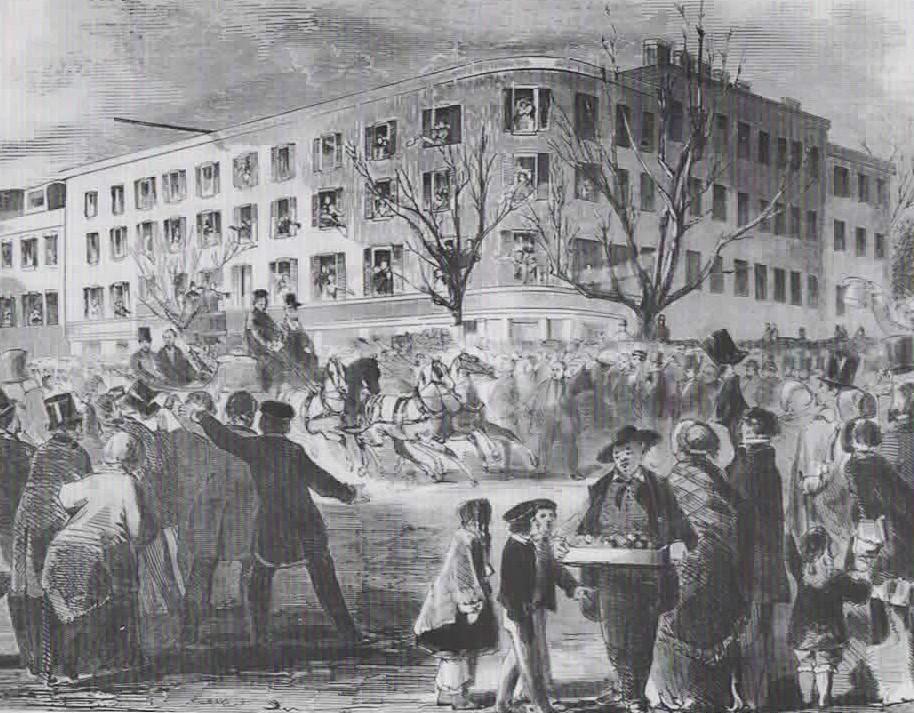
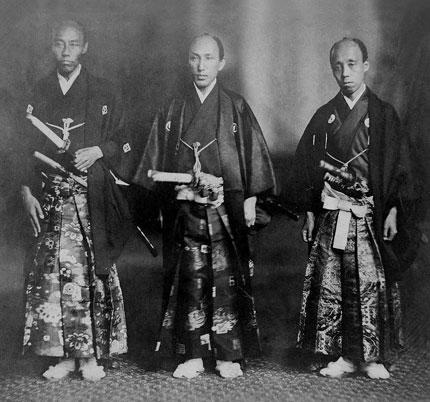
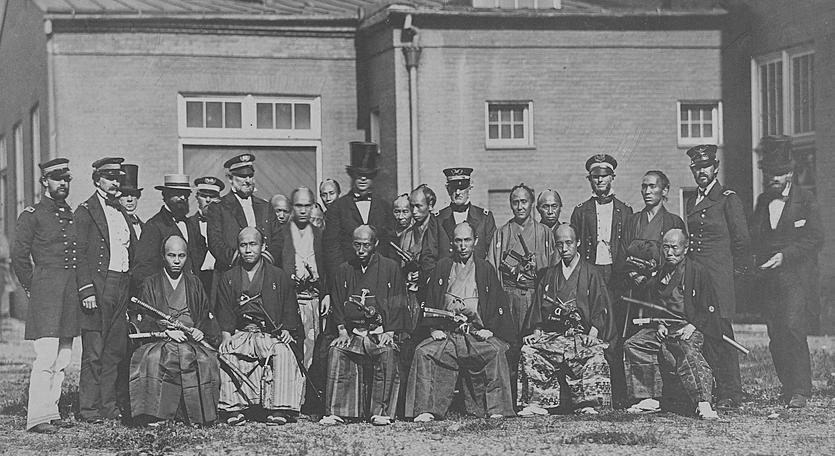
On February 13, 1860, a delegation of 77 samurai left Yokohama, Japan, and traveled to Washington, DC, to ratify the 1858 Treaty of Friendship and Commerce (Harris Treaty) between Japan and the United States. This trip to the United States was a major result of Commodore Matthew C. Perry's negotiated Treaty of Peace and Amity (Treaty of Kanagawa) in 1854. The Willards’ (later Willard) Hotel provided housing for the Japanese men and friendship to make their stay in Washington comfortable and memorable.
1860年2月13日、武士77名の使節団が日本の横浜を出発し、ワシントンD.C.へ向かいました。目的は、日本とアメリカ合衆国の間で1858年に締結された日米友好通商条約(ハリス条約)の批准のためでした。このアメリカへの旅は、1854年のマシュー・C・ペリー提督による日米和親条約(神奈川条約)の重要な成果の一つでもありました。ワシントンで日本人一行に宿泊施設と温かいもてなしを提供し、彼らの滞在を快適で思い出深いものにしたのはウィラード・ホテルでした。
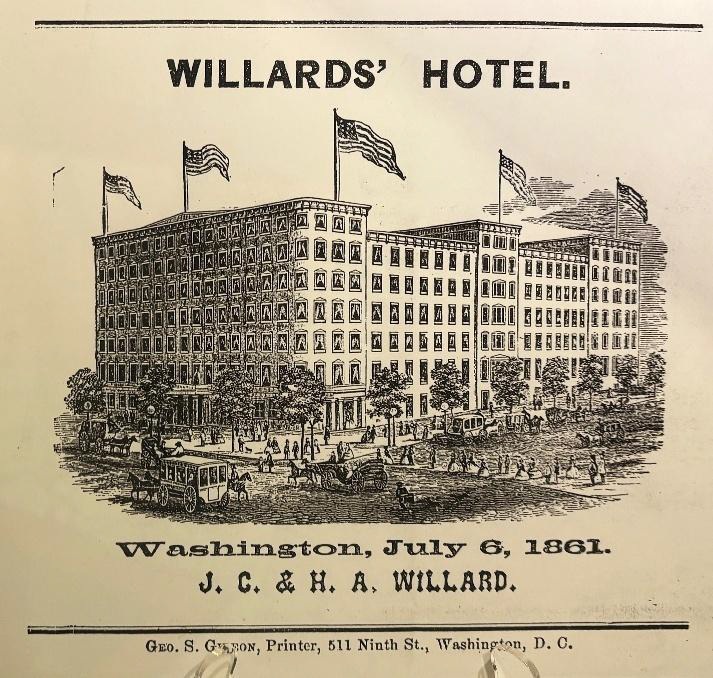
In the early 1840s, the Willard brothers had purchased and consolidated several poorly run hotels on the corner of Pennsylvania and 14th Streets and then made major changes in the 1850s. This historic hotel has been greatly modified since the delegation was in Washington and now has the title of the Willard International Hotel. Some of the memories of this momentous trip of Japanese are re-lived in a small but informative museum in the hotel. Details of the historic visit are also in a book, a copy of which the head hotel concierge/historian gave to me.
1840年代初頭、ウィラード兄弟はペンシルベニア通りと14番街の角にあった経営状態の悪いホテル数軒を買収・統合し、1850年代に大規模な改修を行いました。この歴史あるホテルは、日本の使節団を受け入れた当時以降、大きな改装がなされ、名称も現在はウィラード・インターナショナル・ホテルとなっています。この歴史的な日本人の訪問については、ホテル内にある小規模ながらも情報満載の博物館でその思い出を垣間見ることができます。訪問の詳細は本にもなっていますが、歴史家でもあるホテルのコンシェルジュが私にその書籍を一部くださいました。
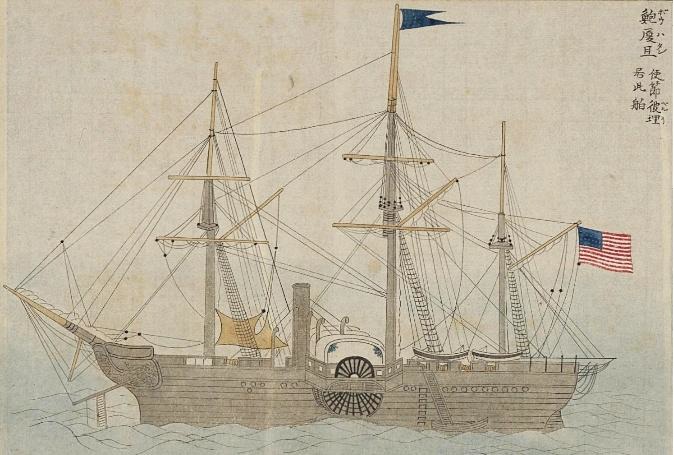
Two ships were involved with the historic diplomatic mission from Japan to the United States and Americans and Japanese men were integrated on both ships. The delegation of 77 samurai ambassadors and their entourage were on the American ship, USS Powhatan, commanded by Captain George Pearson. The Powhatan was a sidewinder steam-powered ship that Commodore Perry had used as one of his flagships during negotiations with the Japanese in 1853-54. American Admiral Josiah Tattnall, Jr. was aboard the Powhatan and had overall command of all Americans on both ships.
日本からアメリカ合衆国へは、外交使節として2隻の船が送られ、両船にはアメリカ人と日本人が混在して乗船していました。77名の武士の使節団は、ジョージ・ピアソン艦長が指揮するアメリカ艦船USSポーハタン号に乗船していました。ポーハタン号は、1853年から1854年にかけてペリー提督が日本との交渉の際、旗艦の一つとして使用したサイドワインダー蒸気船でした。アメリカ海軍のジョサイア・タットナル・ジュニア提督もこれに乗船しており、両船のすべてのアメリカ人を統括していました。
While enroute to San Francisco, the official delegation aboard the Powhatan conducted a friendly visit with King Kamehameha IV and Queen Emma of the Kingdom of Hawaii. When the delegation arrived in San Francisco on March 29th, they were welcomed by ships of the United States, France, and Britain and all flew the Himomaru (Japanese flag) as a welcome gesture. The artillery fort on Alcatraz Island also flew the Himomaru and fired an honorary gun salute.
サンフランシスコへ向かう途中、ポーハタン号に乗船していた公式使節団は、ハワイ王国のカメハメハ4世国王とエマ王妃を親善訪問しています。3月29日、使節団がサンフランシスコに到着すると、アメリカ、フランス、イギリスの艦船が出迎え、歓迎の意を表して日本の旗である日の丸を掲揚しました。また、アルカトラズ島の砲台にも日の丸が掲揚され、祝砲も放たれました。
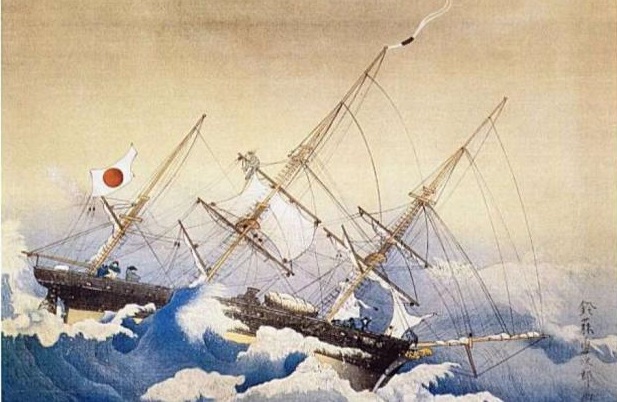
Sailing with the Powhatan and acting as an escort was the smaller but more modern Japanese screw-driven steam-powered ship, Kanrin Maru, under the command of Captain Katsu Kaishu. Personnel on the Kanrin Maru had a Japanese crew of 96 sailors, Japanese reformer Fukuzawa Yukichi, and an experienced navigator, Manjiro Nakahama. All Japanese on both ships came under the overall command of Admiral Kimura Yoshitake aboard the Kanrin Maru.
ポーハタン号と共に航行し護衛を務めたのは、小型ながら近代的な日本のスクリュー式蒸気船・咸臨丸で、勝海舟艦長の指揮下にありました。咸臨丸には96名の日本人水夫、日本の改革者・福沢諭吉、そして経験豊富な航海士・中浜万次郎が乗船していました。両艦の日本人乗組員は全員、咸臨丸に乗艦する軍艦奉行・木村摂津守喜毅の指揮下にありました。
The Kanrin Maru also had an American naval officer, Lieutenant John Mercer Brooke, and 11 experienced American sailors to assist the Japanese with operation and navigation of the ship. Brooke and Manjiro became close friends during the stormy 32-day trip to San Francisco, and this friendship was important for the success of the mission.
咸臨丸には、アメリカ海軍士官のジョン・マーサー・ブルック中尉と経験豊富なアメリカ人水兵11名が乗船しており、航行において日本側を援助していました。ブルック中尉と万次郎は、嵐にも見舞われた32日間のサンフランシスコまでの航海中に親しい友人となり、彼らの友情は航海の成功に重要な役割を果たしたのでした。
The Kanrin Maru arrived in San Francisco on March 17th before the Powhatan. The ship returned to Japan with its full personnel component after some repairs for damage from a storm during transit. The Japanese were surprised when the American Navy refused payment for the repair work, which reflected friendly relation between the two countries.
咸臨丸は3月17日、ポーハタン号より先にサンフランシスコに到着し、航海中の嵐による損傷を修理した後には、乗組員を乗せて日本へ帰還していきました。修理費用をアメリカ海軍が受け取らなかったことに日本側は驚きましたが、これは両国間の友好関係を反映したものでありました。
After a month of touring the city of San Francisco, the delegation on the American ship, Powhatan, traveled south to the Isthmus of Panama. There the delegation disembarked to travel across the isthmus by train to Aspinwall (now Colon, Panama). In the Atlantic Ocean they traveled on the USS Roanoke, under command of Captain William McCluney, to Washington, DC. The delegation arrived on May 14, 1860, and must have been exhausted after their four-month trip from Japan. On May 18th the Daily National Intelligencer reported some details of the unique group and their activities.
サンフランシスコ市内を1か月間観光した後、アメリカ艦船ポーハタン号に乗船していた使節団一行は南下してパナマ地峡へと向かいます。そこで彼らは下船し、列車で地峡を横断してアスピンウォール(現在のコロン、パナマの大西洋側)へ向かいました。大西洋側に出ると、ウィリアム・マクルーニー艦長指揮下のUSSロアノーク号に乗船してワシントンD.C.へと航行しました。使節団が到着したのは1860年5月14日で、4か月の旅で疲れ果てていたことでしょう。5月18日には、デイリー・ナショナル・インテリジェンサー紙が、この珍しい一行と彼らの行動に関する詳細を報じています。
“The Embassy has eighty tons of baggage, a large amount of treasure, and fifteen large boxes of presents for the President of the United States, among which are several very handsome rifles, manufactured in Yeddo, and are an ingenious improvement upon the Sharpe rifle. They also bring with them about eighty thousand dollars in cash, with which to make purchases in this country. This money was brought from Japan in silver, and changed in San Francisco to American gold.
The personnel of the Embassy, servants and all, numbers seventy-one, of whom twenty are officials; one having taken ill at Aspinwall and sent home.”
「使節団一行は80トンの荷物、多額の財宝、そしてアメリカ合衆国大統領への贈り物が入った大きな箱15個を所持しています。その中には、シャープ銃を巧みに改良して江戸で製造された非常に立派なライフル銃が数丁含まれていました。また、この国で購入するために使う現金約8万ドルも持参しています。この現金は日本から銀貨で持ち込まれ、サンフランシスコでアメリカの金貨に両替されました。一行の職員は使用人を含めて71名で、うち20名が役人です。1名はアスピンウォールで病に倒れ、帰国しました。」
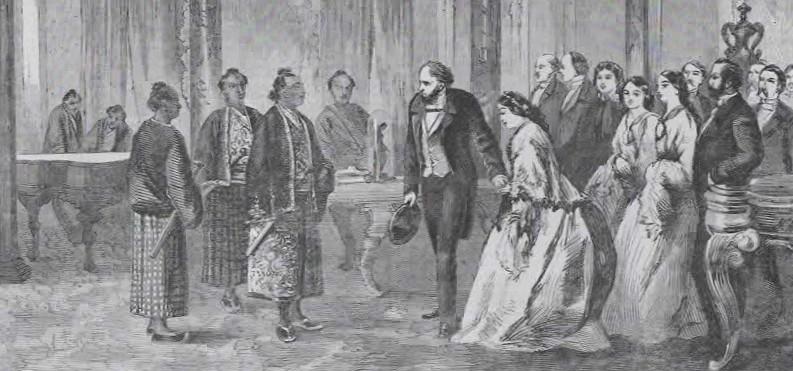
The Japanese travelers received superb attention and accommodations. A whole floor had been renovated for them, and they had their own entrance on 14th Street. They also were provided with their own kitchen and private dining facilities. They were happy to have “the use of their own kitchen which enabled them to survive some of the local culinary heresies, such as drowning rice in butter and sugar as well as the local’s predisposition towards meat and fat.”
日本からの旅行者たちは、最高の待遇と快適な宿泊施設を享受しました。彼らのために1フロア全体が改装され、14番街に専用の入り口が設けられました。さらに、専用の台所と食堂も提供されました。彼らは「専用の台所を利用できたおかげで、バターと砂糖でお米をどろどろにしたり、肉や脂身に偏った常識はずれの地元の食習慣にもうまく対処できた」と喜んでいました。
According to the historic record of the Willard, the Japanese delegation seemed to enjoy their visit to the United States despite the fact that they “were mobbed and gawked at.” Historian, George Feifer, also records that the Japanese unfortunately, did receive some racial slurs. The visitors were entertained and there were many opportunities for interaction between the two cultures that were equally curious about each other, especially concerning their dress and customs.
ウィラードの記録によると、日本の使節団は「群衆に囲まれ、好奇の目で見られた」にもかかわらず、米国訪問を楽しんだようです。歴史家のジョージ・ファイファーは、残念ながら日本人が人種差別的な中傷を受けたことも記録しています。しかし、使節団は歓待を受け、互いに両文化に興味を持ちあい、特に服装や習慣について多くの交流の機会を得たのでした。
The most important and solemn interaction was between the delegation and the President of the United States, James Buchanan, at the White House. Official and unofficial people were at the White House when the delegation arrived. The Daily National Intelligencer reported that the introductions were made with formality after much bowing and some initial hesitation by the Japanese. The visitors were “magnificently dressed” and appeared to be “middle aged men.” The chief ambassador then read a speech that he held in his hand in Japanese that was translated to Dutch and then English as the official address to the President.
最も重要かつ厳粛なやり取りは、ホワイトハウスで行われた使節団とジェームズ・ブキャナン米国大統領との会談でした。使節団が到着した際、ホワイトハウスには公務官に加え非公務官までもが集まっていました。デイリー・ナショナル・インテリジェンサー紙は、日本側は幾度も頭を下げ、当初ややためらいを見せた後、形式的な紹介が行われたと報じました。訪問団は「見事な服装」の「中年男性」に見えました。使節団長は、手に持っていた日本語の原稿を読み上げ、それがオランダ語、そして英語へと翻訳され、大統領への公式演説となりました。
“His Majesty, the Tycoon, has commanded us that we express to his Majesty the President of the United States, in his name, as follows:
Desiring to establish on a firm and lasting foundation the relations of peace and commerce so happily existing between two countries that lately the plenipotentiaries of both countries have negotiated and concluded a treaty, he has now ordered us to exchange the ratification of the treaty in your principal city of Washington. Henceforth he hopes that the friendly relations be held more and more lasting, and he is very happy to have your friendly feeling: and pleased that you have brought us to the United States, and will send us to Japan in your men of war.”
「わが君、大君陛下は、アメリカ合衆国大統領閣下に対し、陛下のお名において以下の通りお伝えするよう我らに命じられました。
両国間の平和と通商関係は、先日両国の全権代表が交渉し条約を締結するに至りましたが、陛下はこれを確固たる永続的な基盤の上に築くことを望み、この度、貴国の首都ワシントンにおいて条約の批准書を交換するよう命じられました。陛下は今後、両国の友好関係がますます永続的なものとなることを望み、貴国からの友好的なご厚意を大変喜んでおります。また、貴国が我々をアメリカ合衆国にお連れくださり、貴国の軍艦で日本へ帰還させてくださることを大変嬉しく思っております。」
A 1924 book by Helen Nicolay gives an interesting translation from the diary of a member of the Japan delegation after attending a ball at a private residence of the US Secretary of State, Lewis Cass.
ヘレン・ニコライが1924年に出版した本には、米国国務長官ルイス・キャスの私邸で開かれた舞踏会に出席した日本の使節団員の日記からの興味深い翻訳が掲載されている。
“Immediately after we were seated the music commenced, and an officer in uniform with one arm around a lady’s waist and the other hand holding one of hers, started moving around the floor on his toes, many others following his example. Upon enquiring we were told this was a ‘dance.’
As I watched the various movements of the dancers, I could not help smiling at the way the very large skirts, called crinoline, which the ladies wore, increased in volume until they became of enormous proportions when the dancers attained their top speed.
This continued until midnight. As for us we had never seen or imagined anything like it before. It was of course with no small wonder that we had witnessed this extraordinary sight of men and bare-shouldered women hopping around the floor arm and arm, and our wonder of the strange performance became so great that we began to doubt whether we were on another planet. I need not say that we did not remain until midnight.”
「席に着くとすぐに音楽が始まり、制服を着た将校が片腕を女性の腰に回し、もう一方の手で女性の手を握りながら、つま先立ちでフロアを動き始めました。他の多くの人々もそれに倣いました。尋ねてみると、これは「ダンス」だとのことでした。
ダンサーたちの様々な動きを見ていると、女性たちが身につけているクリノリンと呼ばれる大きなスカートが、最高速度に達するとどんどん膨らみ、とてつもない大きさになる様子に、思わず笑みがこぼれました。
この光景は真夜中まで続きました。私たちとしては、これまで見たことも想像したこともないような光景でした。肩を露わにした男女が腕を組んでフロアを飛び跳ねるという、この異様な光景を目にしたのは、当然ながら驚きを禁じ得ませんでした。その奇妙なパフォーマンスに驚きが大きくなり、まるで別の惑星にいるのではないかとさえ思い始めました。言うまでもなく、私たちは真夜中までそこに留まることはありませんでした。」
In the mid-1960s, the Willard Hotel was in disrepair and there were plans for demolition. Fortunately, a group of courageous entrepreneurs decided to restore the historic structure to its original beauty. The hotel reopened in 1986 and regained its prominence as a landmark structure in Washington, DC, and regained its unofficial title as Residence of the Presidents. The history of the accommodation of the Japanese delegation was not forgotten, and several items in the Hotel Museum relate to the Japanese visit. There also is mention of Commodore Matthew C. Perry in the Museum, but the large suite that once was named in his honor has now been renamed the Helen Hayes Suite.
1960年代半ば、ウィラード・ホテルは老朽化が進み、取り壊しの計画が進められていました。幸いにも、勇敢な起業家グループがこの歴史的建造物を元の美しさに修復することを決意しました。ホテルは1986年に再開し、ワシントンD.C.のランドマークとしての地位を取り戻し「大統領官邸」という非公式の称号も再び獲得しました。日本使節団の宿泊の歴史は忘れられることなく、ホテルの博物館には日本訪問に関連する品々が展示されています。博物館にはマシュー・C・ペリー提督に関する記述もありますが、かつて彼の名にちなんで名付けられた大きなスイートルームは、現在はヘレン・ヘイズ・スイートと改名されています。
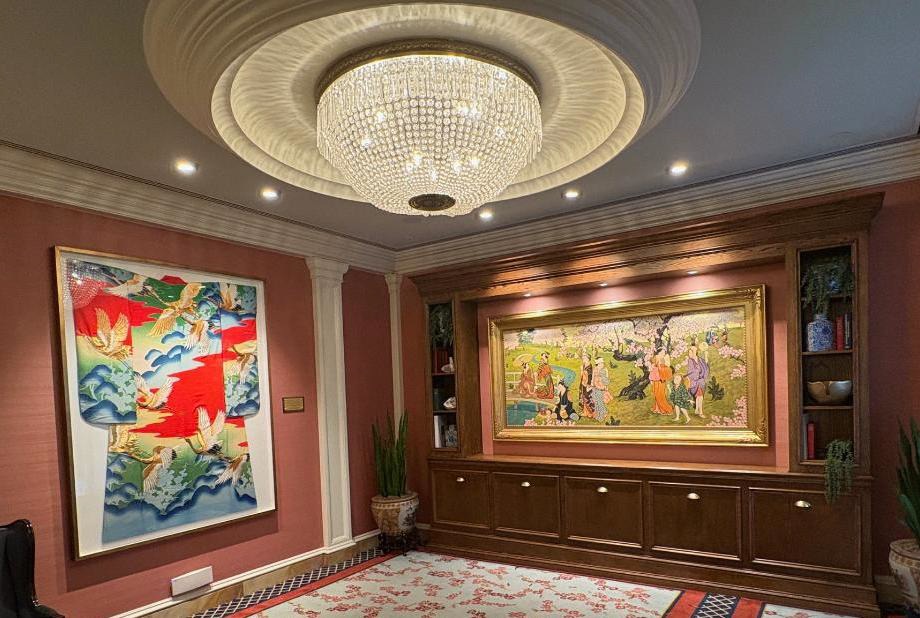
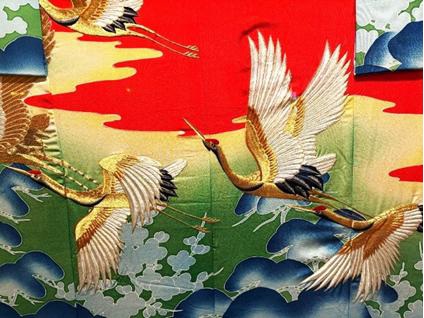
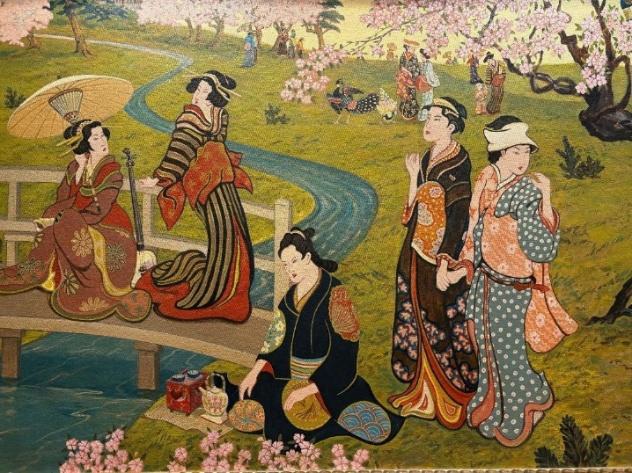
Also of Japanese interest is a beautifully framed kimono displayed on the first floor in a hallway between the main desk and the coffee shop. On an adjoining wall is a large mural painting depicting a Japanese scene in the Spring. Unfortunately, there is no information about either item, but a plaque near the kimono does mention the visit of the Japanese delegation in 1860. Visitors to Washington, DC, who have interest in Japan/American history will find it worthwhile to visit the historic Willard Hotel to view the displays and imagine the experience of the first Japanese to visit the United States over 165 years ago.
また、日本文化に関心のある方には、1階の受付と喫茶店の間の廊下に展示されている、美しく額装された着物もお勧めです。隣接する壁には、春の日本の風景を描いた大きな壁画があります。残念ながら、どちらの品物についても詳しい説明はありませんが、着物の近くにある銘板には、1860年の日本使節団の訪問について記されています。ワシントンD.C.を訪れる方で、日米史に興味のある方は、歴史あるウィラード・ホテルを訪れ、展示品を見学し、165年以上前に初めて米国を訪れた日本人の体験を想像してみると良いでしょう。
References(参考文献):
Feifer, George. 2006. Breaking open Japan – Commodore Perry, Lord Abe, and American Imperialism in 1853.
Harpers Collins Publishers, New York.389 p.
Finn, Dallas. 2003. Guests of the Nation: The Japanese Delegation to the Buchanan White House, in White House
History, Journal of the White House Historical Association 12, 373 p. Also, online at White House History.org, http://tinyurl.com/4xqsu5w.
Nakahama, Kyo. 2008. John Manjiro – The starting point of friendship between Japan and the United States. Printed by author, Tokyo, Japan. 90 p.
Nakakuni, Junya and Junji Kitadai (Translators). 2003. Drifting toward the southeast – The story of five Japanese castaways. A complete translation of Hyoson Kiryaku, by John Manjiro. Spinner Publications, Inc., New Bedford MA. 144 p.
Nicolay, Helen. 1924. Our Capital on the Potomac. The Century Co., New York. 335 p.
Wallace, Richard, and Marie Pinak Carr. 1986. The Willard Hotel – An Illustrated
History. Dicmar Publishing, Washington, DC. 112 p.
Young, Dana B. 1983. The Voyage of the Kanrin Maru to San Francisco, 1860. California History. 61(4): 264-275
Published by: University of California Press.