31)The Missing Button Mystery
31)消えたボタンの謎
When I was a small boy there was a game for children called, “button, button, who’s got the button.” The game had many variations but mainly dealt with one child holding a button they had secretly received in clasped hands, while other children, also with clasped hands, tried to guess who had the button.
I was reminded of this classic game in early September 2014 when I was in Hakodate, Japan, which is on the island of Hokkaido, the most northern of the four major islands. I learned of a button mystery that involved my ancestor, Commodore Matthew C. Perry, which was totally new information to me. More about the button mystery later, but first some background information.
私が幼い頃、「ボタン、ボタン、誰がボタン持ってる?」という子どもの遊びがありました。この遊びには様々なバリエーションがありましたが、基本的には、一人の子どもがこっそりと受け取ったボタンを握りしめ、他の子どもたちも同じように両手を握りしめ、誰がそのボタンを持っているかを当てるものでした。
2014年9月初旬、私は日本の4つの主要な島のうち、最北端に位置する北海道の函館を訪れました。その時、この昔ながらの遊びを思い出すことになりました。というのは、ここで私の先祖であるマシュー・C・ペリー提督のボタンにまつわる謎を知ったからです。それは、私にとって全く新しい情報でした。ボタンの謎については後ほど詳しく説明しますが、まずは背景となる情報を少しご紹介します。
I was in Hokkaido to give a lecture about Commodore Perry at the 9th International Symposium of America-Japan Societies held in Sapporo on September 5-7, 2014. Dr. Shoji Mitarai, a professor from Sapporo University, had invited me to speak and also had suggested we travel to other cities to talk about Perry and do research together. We traveled along the coast by train to Hakodate on September 8th to learn more about Commodore Perry’s visit there in 1854, after negotiating the Treaty of Peace and Amity with Japan. Dr. Mitarai was a great guide as his specialty at the University is the influence of foreigners on Japanese history.
私は、2014年9月5日から7日にかけて、札幌で開催された第9回日米協会国際シンポジウムに招かれ、ペリー提督に関する講演を行いました。札幌大学の御手洗昭治教授からの依頼で講演を行いましたが、教授からは、ペリーについてもっと研究し、互いに語り合うために、他の都市へも出かけようという提案をもらいました。こうして9月8日、私たちは、1854年の日米和親条約交渉後のペリー提督の来航について詳しく学ぶため、海岸沿いを鉄道で函館へ向かいました。御手洗教授は、外国人が日本史に与えた影響を専門としているため、素晴らしいガイド役を務めてくれました。
Perry had negotiated for two ports to be opened to American ships and Hakodate was one and Shimoda was the other port. Because Hokkaido was a distant island from the Tokyo area, the people living in Hakodate were relatively unaware and unaffected by much of the politics that was occurring on the main island of Honshu in the mid-1800s. Perry was interested in Hakodate because of its value as a port for American whaling ships passing through the Tsugaru Strait, while traveling between the Pacific Ocean and the Sea of Japan. After seeing Hakodate Harbor, Perry commented that it was “one of the safest and most convenient harbors I have ever seen for vessels” and that the port has no superior in the world. He was so impressed he even said, “Hakodate Port is just like Gibraltar. What more could be desired?”
ペリーが開港を求めた二つの港のうちの一つは箱館、もう一つは下田でした。北海道は東京から遠く離れているため、1800年代半ば、箱館の住民は本州で起こっていた政治的な動きをほとんど知らず、またその影響も比較的少なかったのです。ペリーが箱館に関心を持ったのは、アメリカ捕鯨船にとって、津軽海峡を通過し、太平洋と日本海を行き来できる重要な港になると考えたからです。箱館港を見たペリーは、「これまで見た中で、船舶にとって最も安全かつ便利な港の一つだ」と述べ、世界を見渡してもこの港に勝るものはないと述べました。感銘を受けた彼は、「箱館港はまるでジブラルタルのようだ。これ以上何を望むだろうか」とさえ言ったのでした。
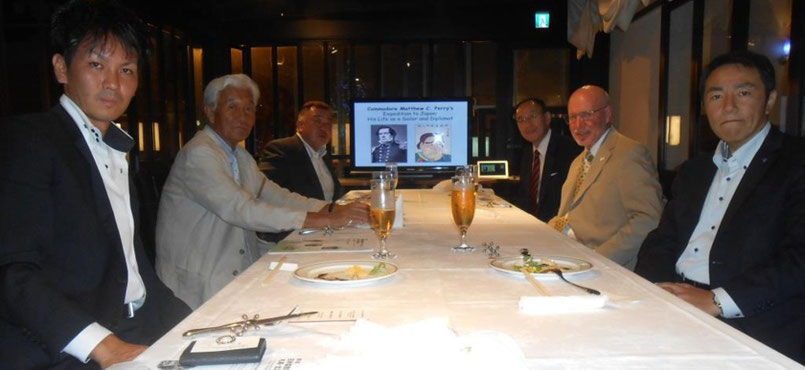
After a brief respite in our hotel we traveled to a local restaurant where we met members of the America/Japan Society of Hakodate for dinner and where I gave a program about Commodore Perry. It was a small select group of only four men and all of them very interested and knowledgeable concerning the history of Hakodate and Commodore Perry’s visit.
ホテルで少し休憩した後、私たちは地元のレストランへ行き、函館日米協会の皆さんと夕食を共にしました。そこで私はペリー提督についての話をしました。集まったのはわずか4人の男性という少人数のグループでしたが、全員が函館の歴史とペリー提督の来航について関心が高く、知識も豊富でした。
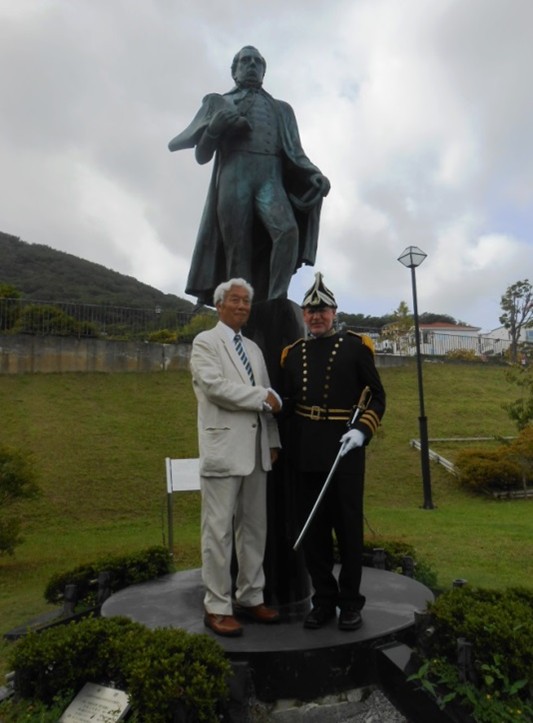
In the early morning Dr. Mitarai and I got a tour of the local fish market with Mr. Kiyoo Katoh, a very friendly man, whom had been one of the participants for the dinner/lecture. After breakfast we were joined by two other dinner guests, Mr. Kasuhisa Watanabe and Mr. Susumo Nakano, and continued touring Hakodate with Perry Park being the main destination. Mr. Katoh was more than just interested in Commodore Perry, but the man who played the role of Perry at city affairs commemorating the arrival of Perry in Hakodate. His large size and full head of hair made him an appropriate role player for “Old Bruin,” as the sailors referred to the Commodore. To my surprise, however, he wanted me to wear his uniform and play the role of Perry at the statue of the Commodore located in Perry Park. I obliged and felt fairly good in a Navy uniform again, in spite of subsequent ridiculing by some members of my family. After the numerous obligatory photographs we engaged in an interesting conversation of the statue.
早朝、御手洗博士と私は、夕食兼講演会の参加者の一人で、とても気さくな加藤清郎氏とともに、地元の魚市場を見学しました。朝食後、やはり夕食に同席した渡辺カズヒサ氏と中野晋氏も加わり、ペリー公園を主な目的地として函館観光を続けました。加藤氏はペリー提督だけでなく、函館市のペリー来航記念式典においてペリー役を演じることにも興味を持っていました。提督は水兵達から「オールド・ブルイン(老熊)」と呼ばれていましたが、加藤氏の大柄な体格と豊かな髪は、まさにその役にぴったりでした。ところが、彼は私に海軍の制服を着て、ペリー公園にある提督の像の前でペリー役を演じてほしいと頼んできたのです。私は驚きましたが、その申し出を受け入れ、海軍の制服を着て、かなり良い気分になりました(後に、家族の一部からは嘲笑されましたが…)。私たちは、ペリー公園で多くの写真を撮影し、その像について興味深い会話を交わしました。
The life-size statue was created for the celebration that took place on May 17, 2004, to mark the 150th anniversary of Commodore Perry’s arrival in Hakodate on May 17, 1854. The only other life-size statue of Commodore Matthew Perry exists in Newport, Rhode Island, in Touro Park, which I have visited many times. The Hakodate statue of Perry shows him supposedly on the bow of his flagship Powhatan taking his first step toward the future of peace and amity between Japan and the USA. He is dressed in his naval uniform holding his bicorn hat in his right hand near his chest to express his respect for the citizens of Hakodate. His left hand rests on the hilt of his sword and his cape is draped over his left shoulder exposing only the gold epaulette on his right shoulder.
この等身大の像は、ペリー提督が1854年5月17日に箱館に来航してから150年を記念して2004年5月17日に行われた式典のために製作されました。これ以外のマシュー・ペリー提督の等身大の像は、ロードアイランド州ニューポートのトーロ公園にあるものが唯一で、そこには私は何度も訪問しています。箱館のペリー像は、旗艦ポウハタン号の舳先に乗り、日本とアメリカの平和と友好の未来に向けて第一歩を踏み出した姿を描いています。海軍の制服に身を包み、右手に二角帽を持って、箱館市民への敬意を表しています。左手は刀の柄に置かれ、左肩にはマントがかけられていますが、右肩からは金の肩章が見えています。
The statue is actually greater than life-size at 2.2 meters (7.2 feet), although Perry was tall at approximately 6 feet. The statue sits on a large black granite stone pedestal signifying the black ships of Perry’s squadron. Five azaleas planted around the black base of the pedestal represent the five ships that were in Perry’s squadron at the time of the Hakodate visit. This stock of azaleas came originally from Northeastern Asia in 1668 and now is referred to as the Black Ships Azaleas. The age-old Japanese art form, Hanakotoba, gives meaning to all flowers, and some interpretations are that the azalea symbolizes generosity (very appropriate I learned).
ペリーの身長は約6フィート(約1.8メートル)でしたが、像の方は7.2フィート(2.2メートル)で実物より大きく、黒船を象徴する大きな黒い花崗岩の台座の上に置かれています。黒い台座の周りに植えられた5本のツツジは、箱館来航時にペリー艦隊が率いていた5隻の船を表しています。このツツジは1668年に北東アジアから持ち込まれたものですが、現在では「黒船ツツジ」と呼ばれています。日本では、すべての花に「花言葉」を与え、古くからその意味を伝承しており、ツツジは寛大さを象徴すると解釈されています(とても適切な表現だと知りました)。
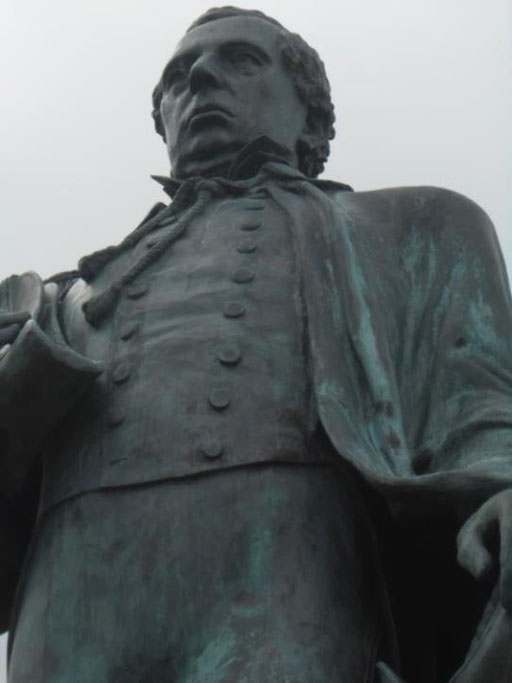
The local female artist, Ms. Machiko Kodera (1950-2012), who designed the statue, had done extensive research on Perry and had learned that when he came ashore to meet local authorities he also met some town citizens. Perry realized they were very interested in his buttons on his elaborate uniform beautifully tailored for his large frame. In attempt to show friendship he tore a loose button from his uniform and gave it to one of the admirers. This generous act of kindness was recorded in local records that the statue artist had uncovered and she thought it should be reflected in her statue. It was only later when examining some pictures of the event that I noticed that the uniform Mr. Katoh asked me to wear was also missing a button, showing the detail and interest of Mr. Katoh and the local citizens in this action by Perry.
この像をデザインした地元の女性芸術家、小寺真知子氏(1950-2012)は、製作前にペリーについて徹底的に調査しました。そして、提督が上陸して地元当局に面会した際、一般の町民にも会ったことを知りました。その時ペリーは、自分の大きな体格に合わせて美しく仕立てられた制服のボタンに、人々が大変興味を持っていることに気づきました。そこで、友情を示すため、ゆるんでいたボタン一つを制服から引きちぎり、それを彼らのうちの一人に与えました。この寛大な行為は、彫刻家が発見した地元の古文書に記録されており、彼女はそれを製作する像にも反映させるべきだと考えました。後になって、函館で撮影した写真をいくつか調べていた時、加藤氏が私に着せた制服にもボタンが一つ欠けていることに気づきました。これは、加藤氏と地元住民がペリーのこの行動にどれほど細心の注意を払っていたかを示しています。
The missing button provided a good story for the local tour guides and a way of demonstrating friendship between peoples of two very different nations. The question I have that went unanswered during my visit was, “button, button, who’s got the button” now? It would be nice to solve this mystery and learn if it still exists and bring full closure to the story. The other mystery that surprised me is that this incident by Perry was not mentioned by him in his Narrative of the Expedition, or, to the best of my knowledge, is it recorded in any of the books on him published in the English language.
このボタンの件は、地元のツアーガイドにとって、全く異なる二つの国の人々の友情を示す良い物語となりました。今回の訪問中、私が抱いていた疑問は「ボタン、ボタン、”今”誰がボタン持ってる?」というものでした。この謎が解明され、まだ存在するのかどうかが分かれば、物語に完全な終止符が打たれるでしょう。もう一つ私を驚かせた謎は、ペリーのこの出来事が彼の『遠征記』の中で触れられていないことです。私の知る限り、英語で出版された彼に関する書籍にも記録されていません。
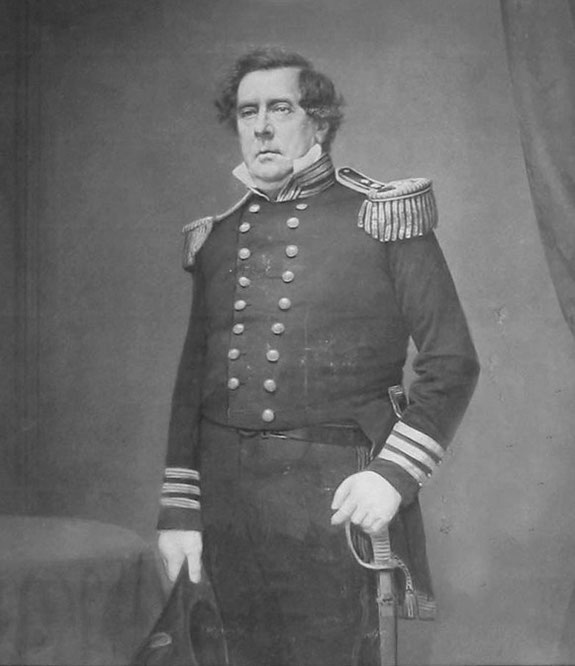
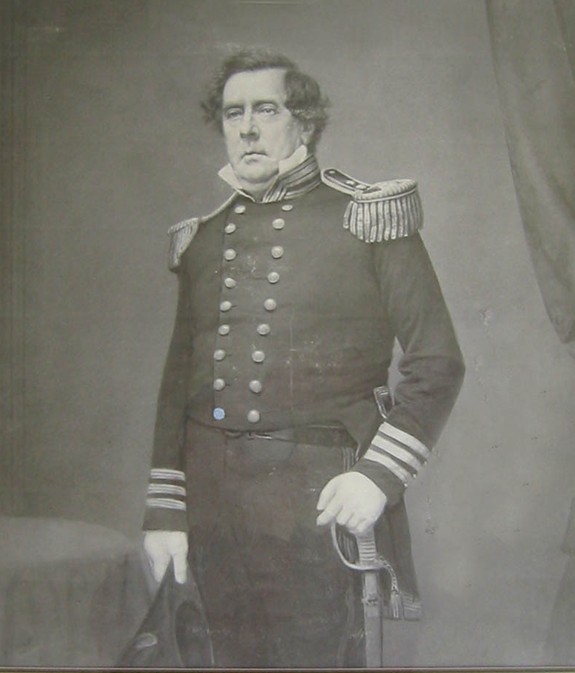
When I returned home to the United States, I realized that the photograph of Commodore Perry that was taken in 1856 by Matthew Brady (1823-1896) showed a button missing on Perry’s uniform at the same location as that on the statue. Was that the uniform button that Perry had given in Hakodate that had not been replaced? It seems unlikely to me that the Commodore, so concerned about details, would leave a button unsecured for an official photograph. Although I can find no documentation of this detail in books on Perry or on Brady, I did note that is subsequent reproductions of this photograph, the missing button has been added in what looks like in a fairly amateur way due to color and being flat with no design.
アメリカに帰国後、マシュー・ブレイディ(1823-1896)が1856年に撮影したペリー提督の写真を見ていた時、銅像と同じ位置のボタンが一つ欠けていることに気づきました。ペリーは、函館で制服のボタンを贈った後、まだ新しいものを付けていなかったのでしょうか。細部にこだわる提督が、公式写真でボタンを留めずにいたとは考えにくいことです。ペリーやブレイディに関する書籍には、この詳細が記載されている箇所は見当たりません。その後、この写真がコピーされていった過程で、かなり素人っぽい方法で、デザインのない平面的な色も異なるボタンが付け加えられていることに気付きました。
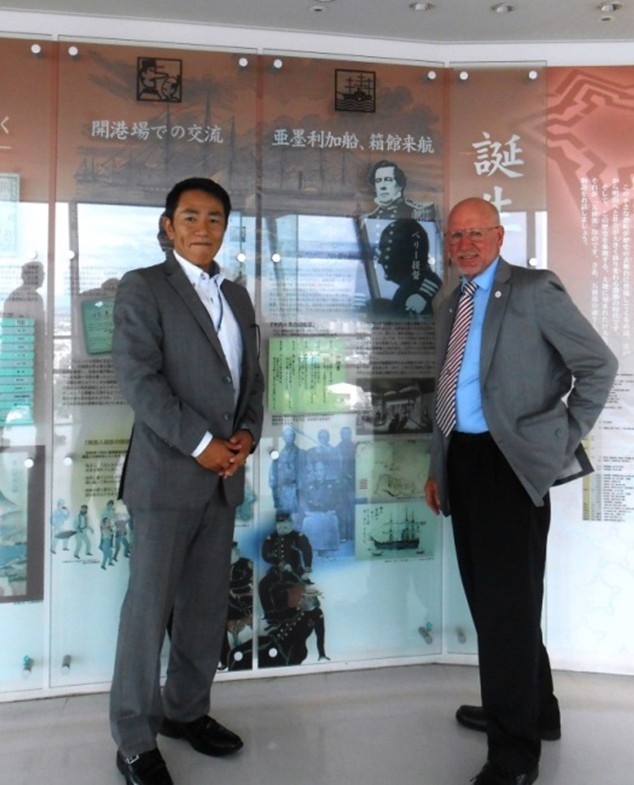
The end of my short visit to Hakodate came later in the day. After an enjoyable lunch on the first floor of the observatory tower owned and managed by Mr. Nakano, we took the elevator to the viewing platform of the 90-meter tower. The large, glassed viewing area provided a breathtaking view of Fort Goryokaku immediately below, and the Tsugaru Strait and Mount Hakodate on the horizon. Throughout the two floors for viewing in the observatory are exhibits of the history of Hakodate including a large one of Commodore Perry that Mr. Nakano was proud and pleased to show me.
函館への短い滞在の終日、私たちは中野氏が所有・管理する五稜郭タワーの1階で楽しい昼食をとり、エレベーターで高さ90メートルの展望台へ昇りました。ガラス張りの広々とした展望エリアからは、眼下に五稜郭、そして水平線に津軽海峡と函館山を望む息を呑むような眺めが広がっていました。展望台の2つのフロアには、函館の歴史に関する展示があり、その中にはペリー提督に関する充実した展示もあって、中野氏はそれらを嬉しそうに誇りをもって私に見せてくださいました。
My new Hakodate friends certainly were gracious to me and I guess I can thank the Commodore for his act of generosity with a simple button that initiated these good relations between our two countries. The button was of no material value to Perry, but of great interest and value to the Japanese, who were not using buttons at that time. Small gestures of kindness sometimes bring friendships and break down cultural barriers. Thanks to a button, Japanese and Americans in Hakodate became friends and that friendship endures today throughout Japan.
函館で出会った新しい友人たちは本当に親切でした。ペリー提督による一つのボタンのプレゼントが、両国間の良好な関係の始まりとなったことに、感謝しなくてはなりません。ボタンはペリーにとって物質的な価値はありませんでしたが、当時ボタンを使っていなかった日本人にとっては、大変興味深く、価値のあるものでした。小さな親切が友情を生み、文化の壁を打ち破ることもあります。一つのボタンのおかげで、函館の日本人とアメリカ人は友人になり、その友情は今日も日本中に続いています。