

30)Commodore Perry's Porcelain From The Expedition
30)遠征からペリー提督が持ち帰った磁器
Many objects of art were purchased or given to Commodore Matthew C. Perry during the Expedition to Japan and especially after the negotiations of the Treaty of Peace and Amity between the United States and Japan. Although many gifts were designated from the Emperor, most historians believe they actually came from the Shogun, who ruled Japan at the time. Also, although the gifts were given to Perry, they often were designated for particular persons, like the President. Commodore Perry also personally purchased many items during the Expedition.
One of the personal items Perry brought back from the Expedition was porcelain in the form of bowls, plates, and tea cups with covers. In March 2025, a cousin of mine, Ms. Louise Perry Russell, and her husband, Mr. Leo Roy, visited me in Bristol, RI, and presented me with a porcelain tea set that was obtained by Commodore Perry during the Expedition. I was quite elated as I cherish any historic artifacts that belonged to Commodore Perry.
日本遠征中、特に日米和親条約交渉後、マシュー・C・ペリー提督には多くの美術品が贈呈され、また提督自身もそれらを購入しました。多くの贈り物は天皇からのものとされていますが、ほとんどの歴史家は、それらは実際には当時日本を統治していた将軍からの贈呈されたものだったと考えています。また、贈呈品はペリーに託されましたが、大統領など特定の人物に向けられたものも多かったのです。ペリー提督も遠征中に個人的に多くの品物を購入しました。
ペリーが遠征から持ち帰った私物の一つは、蓋付きの椀、皿、ティーカップなどの磁器でした。2025年3月、私のいとこであるルイーズ・ペリー・ラッセルさんと夫のレオ・ロイさんがロードアイランド州ブリストルに居た私を訪ね、ペリー提督が遠征中に入手した磁器のティーセットを贈ってくれました。私はペリー提督が所有していた歴史的遺物を大切にしているので、とてもうれしかったです。


The ownership (provenance) of the porcelain has been recorded over the years, which is straightforward and well documented in writing. In a typed letter dated September 7, 1910, Mrs. Georgina R. S. Beach outlined how Commodore Perry had given two sets of porcelain, one which he gave to his wife, Mrs. Jane Slidell Perry, and the second to his younger sister, Mrs. Anna Maria (Perry) Rodgers (1797-1858). Anna was the wife of Commodore George Washington Rodgers. The porcelain given to Anna was then inherited by their daughter Elizabeth R. Rodgers (1828-1906), who married Lieutenant Richard H. Smith. Their daughter was Mrs. Georgiana Smith, the author of the provenance letter, who was next in line to inherit the porcelain. Georgiana, who was born in 1856, married Mr. Henry Bruce Beach in 1881 and received the porcelain as a wedding present. The porcelain then was given to a cousin, Mrs. Luena Louise Russell, who passed it on to Mrs. Louise Perry Russell, who gave it to me.
磁器の所有権(由来)は長年にわたって記録されており、簡潔かつしっかりと文書化されています。1910年9月7日付のタイプライターで打たれた手紙には、ペリー提督が2セットの磁器を受け取った経緯が記されています。1セットは妻のジェーン・スライデル・ペリー夫人に、もう1セットは妹のアンナ・マリア(ペリー)・ロジャース夫人(1797年 - 1858年)に贈られました。アンナはジョージ・ワシントン・ロジャース提督の妻でした。アンナに贈られた磁器は、彼らの娘エリザベス・R・ロジャース(1828年 - 1906年)が相続し、彼女はリチャード・H・スミス中尉と結婚しました。次に相続したは、彼らの娘で、この由来を記した手紙の筆者であるジョージアナ・スミス夫人です。 1856年生まれのジョージアナは、1881年にヘンリー・ブルース・ビーチ氏と結婚し、結婚祝いとしてこの磁器を受け取りました。その後、この磁器は従妹のルエナ・ルイーズ・ラッセル夫人に贈られ、さらにルイーズ・ペリー・ラッセル夫人に受け継がれ、そして私に贈られました。
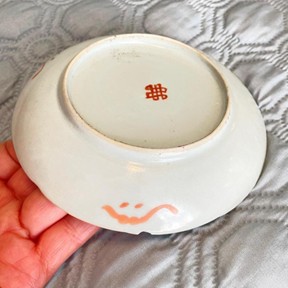
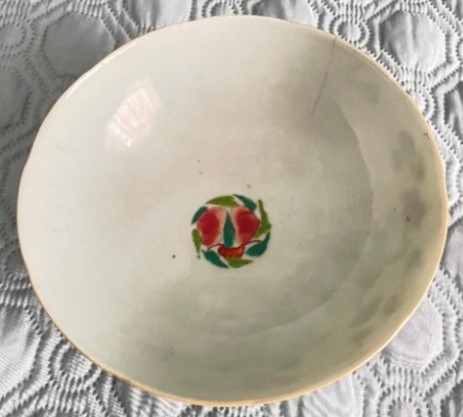
In the letter written by Mrs. Beach she states that the porcelain was always in family possession and was only loaned out once by her mother, Mrs. Elizabeth Rodgers. She loaned it to her brother, Admiral Christopher Raymond Perry Rodgers, when he was stationed in Norfolk, Virginia. The time period was after the Civil War, and the porcelain was possibly used on some kind of historic display. Mrs. Beach recorded that some of the porcelain was broken when it was shipped back to her mother, due to faulty packing. It is possible that this unfortunate shipping episode might account for the very small chip on the edge of the plate as seen if one looks closely at the pictures of the top and bottom views of the plate below. Also of interest is that the maker’s mark on the plate is different than the maker’s mark on the cup and bowl.
ビーチ夫人(ジョージアナ)の手紙には、この磁器は一貫して家族で所有していたとありますが、彼女の母のエリザベス・ロジャース夫人が一度だけ貸出したことがあるとも記されています。貸出し先は、バージニア州ノーフォークに駐留していた兄のクリストファー・レイモンド・ペリー・ロジャース提督でした。当時は南北戦争後のことで、この磁器は何らかの歴史的展示に使用された可能性があります。ビーチ夫人は、磁器が母親の元へ返送された際に、梱包に不備があり、一部が割れていたと記録しています。以下の皿の上下の写真をよく見るとわかるように、皿の縁がごく小さく欠けており、この不運な輸送中の出来事が、その原因を作ったものであろうと思われます。また、皿の高台銘が、カップやボウルの高台銘と異なることも興味深い点です。

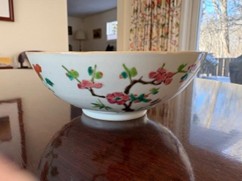
My friend, Mr. Hirotaka Okutsu, who lives in Odawara, Japan, and is an expert on Commodore Perry, suggested that the design on the porcelain was similar to designs used by a famous Japanese potter, Mr. Sakaida Kakiemon (1596-1666). Kakiemon-san, whose name comes from his use of persimmon (kaki) in his porcelain, was the first person to develop the secret of decorating porcelain with enamel. Kakiemon used beautiful flowers, but also birds to decorate the porcelain. However, Okutsu-san also doubted the porcelain came from Japan and thought it was most like porcelain made and obtained in China.
小田原在住でペリー提督の専門家である友人の奥津弘高氏は、この磁器のデザインが、日本の著名な陶工、酒井田柿右衛門(1596-1666)のデザインに似ているのではないかと示唆しました。柿右衛門氏は、磁器に柿(かき)を使ったことからその名が付けられ、磁器に七宝で装飾を施す技法を初めて発明しました。柿右衛門氏は、美しい花だけでなく鳥も磁器に装飾しました。しかし奥津氏は、この磁器が日本製である可能性を疑い、中国で製造・入手された磁器に最も似ていると考えていました。
Although the descendants of Commodore Perry have indicated in oral history and written documentation about the ownership of the porcelain, there is no official documentation of how Commodore Perry obtained the porcelain. When the treaty was signed in 1854 and all diplomatic activities ended, the official Japanese gifts were carefully boxed and stored on the cargo ship, USS Supply. This ship was sent to the Navy Department in Washington and gifts were initially assigned to the U.S. Patent Office. The Smithsonian Institution (SI) was not created until 1888, and the gifts were transferred to various agencies that predated the Smithsonian.
ペリー提督の子孫は口承や文書によって磁器の所有権について言及していますが、ペリー提督がどのようにして磁器を入手したかを示す公式記録は存在しません。1854年に条約が調印され、すべての外交活動が終了すると、日本の公式贈呈品は厳重に箱詰めされ、貨物船USSサプライ号に搭載されました。この船はワシントンの海軍省に向かい、そこで贈呈品は米国特許庁にまずは収納されました。スミソニアン協会(SI)が設立されたのは、それよりずっと後の1888年でしたので、それまでこうした贈呈品は様々な機関に移管されていきました。
I can find no mention of porcelain gifts given to Commodore Perry in his Narrative by Rev. Francis Hawks or in the official Narrative summary by Mr. Roger Pineau. The well documented SI account by Mr. Chang-su Houchins of artifacts given to the United States does not show any porcelain given to Commodore Perry. The report does list five boxes of porcelain cups given to the “Government of the United States.” The official gifts given to Commodore Perry from the Emperor of Japan appear to be very modest (and unexplainable) and include a lacquered writing box and writing apparatus, pieces of pongee (silk fabric), and pieces of flowered crape (paper).
フランシス・ホークス牧師の『遠征記』にも、ロジャー・ピノー氏による公式の『遠征記』要約にも、ペリー提督に贈られた磁器の贈り物に関する記述は見当たりません。また、チャン・スー・ハウチン氏による米国への贈呈品に関する詳細な資料にも、ペリー提督に贈られた磁器の記述はありません。報告書には、「米国政府」に贈呈された磁器のカップ5箱が記載されています。天皇からペリー提督に贈られた公式の贈り物は、漆塗りの筆箱と筆記具、紬(絹織物)、花模様の縮緬(紙)など、非常に質素(かつ説明のつかない)なもののようです。
It seems likely that Commodore Perry received many more gifts of higher value that were not recorded as such, due to long term federal regulations prohibiting acceptance of personal gifts from foreign countries by government employees. The SI report shows images of seven different porcelain items, but none of them resemble the items described above or mention the Emperor of Japan as donor or Commodore Perry as the donee.
当時は、政府職員による外国からの個人的な贈り物の受け取りを禁じていた連邦法の規定があったため、ペリー提督は、記録に残されていない、より価値の高い贈り物を多数受け取っていた可能性が高いと思います。スミソニアン報告書には7種類の異なる磁器の画像が掲載されていますが、いずれも上記の品物に類似しておらず、寄贈者として天皇、受贈者としてペリー提督の記載はありません。
Because of the uncertainty of whether the porcelain was a gift to Commodore Perry or if he had purchased the porcelain himself, I contacted my friend, Ms. Hiroko Todoroki, in hopes of getting clarification from Japanese porcelain experts. Information that was quickly received from experts, revealed that the porcelain was not made by Kakiemon or even made in Japan, but was made in China and most likely purchased by Commodore Perry as gifts for his family. There were four flowers on the porcelain that were identified as lotus, chrysanthemum, peony. and plum. The center design of the saucer was identified as peach and a bat, which represents good fortune in Asian culture. The bottom mark was written in the broken Chinese letters, so it was difficult to designate the correct era, but appeared to be most likely that the porcelain was made between 1820 and 1850.
この磁器がペリー提督への贈り物だったのか、提督自身が購入したものなのか不明だったため、友人の轟木洋子さんに連絡を取り、日本の磁器専門家からの説明を求めました。専門家から得られた情報によると、この磁器は柿右衛門作でも日本製でもなく、中国製で、ペリー提督が家族への贈り物として購入した可能性が高いとのことでした。磁器に描かれている花は蓮、菊、牡丹、梅の4つで、ソーサーの中央のデザインは桃とコウモリで、アジア文化で幸運を意味するだということです。正確な年代を特定するのは困難ということですが、漢字で書かれた底の高台銘から、1820年から1850年の間に作られた可能性が高いだろうとのことでした。
After getting the information about the porcelain from Ms. Todoroki, I received pictures of two additional bowls (without covers) that were part of the original gift that Mrs. Luena Louise Russell had given to Mrs. Louise Perry Russell but were not given to me. These bowls may have been originally given to Commodore Perry’ sister, Anna. Both bowls had cracks that have been repaired using the Japanese Kintsugi method of repair. Also of interest was that these bowls had no Chinese characters on them. The cracks in the porcelain might have been the result of the faulty shipment described above. Family lore spoke of Commodore Perry having brought back two tea sets for family members, so these bowls may well be from the other set.
轟木さんから磁器に関する情報を得た後、ルエナ・ルイーズ・ラッセル夫人がルイーズ・ペリー・ラッセル夫人に贈った贈り物の一部で、私に渡されなかった2つの追加の鉢(蓋なし)の写真を受け取りました。これらの鉢は、もともとペリー提督の妹であるアンナに贈られたものだった可能性があります。どちらの鉢にもひび割れがあり、日本の金継ぎの技法で修復されています。また興味深いのは、これらの鉢には漢字(高台銘)が書かれていなかったことです。磁器のひび割れは、前述の輸送不良によるものだった可能性があります。家伝によると、ペリー提督は家族のために2つのティーセットを持ち帰ったとのことなので、これらの鉢はもう1つのセットの一部である可能性があります。
The role of gifting during foreign diplomatic relations was an important aspect of Commodore Perry’s success in Japan and the signing of the Treaty of Peace and Amity in 1854. Although these porcelain tea sets described above probably represent purchases by Perry and not gifts to him, they do represent interesting and valuable artifacts of the Expedition to Japan. More details need to be explored and studied about the gifts between our countries to better understand gifting as one of the great models in American diplomatic negotiations.
外交関係における贈り物の役割は、ペリー提督の日本での成功と1854年の日米和親条約締結において重要な役割を果たしました。上記で紹介したこれらの磁器製ティーセットは、ペリー提督が購入したものであり、贈呈品ではないと思われますが、日本遠征の興味深い貴重な遺物であることは間違いありません。贈り物がアメリカの外交交渉における優れた模範の一つであったことをより深く理解するためには、両国間の贈り物について、より詳細な調査と研究が必要です。
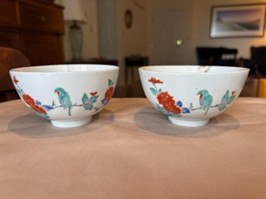
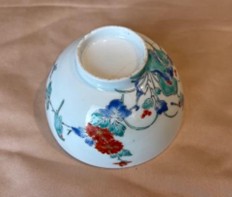
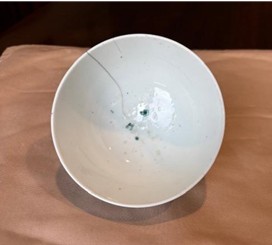

Two bowls obtained by Commodore Perry during Expedition to Japan showing no bottom makers mark and showing repaired cracks on both bowls with the Japanese Kintsugi method of repair. ペリー提督が日本遠征中に入手した2つの椀。底に職人の刻印(高台銘)はなく、どちらの椀も日本の金継ぎ技法でひび割れが修復されている Photo by Perry Russell